
Ecommerce Marketing in 2026: 10 Strategies to Win Both Audiences
Ecommerce marketing in 2026 involves two key audiences: the shoppers you've always sold to, and the AI systems that increasingly filter search results, summarize reviews, and recommend products. To succeed, you need to attract both.
The fundamentals of ecommerce marketing remain the same - you still need traffic, conversions, and repeat purchases. However, the path to achieving these goals now runs through systems that read your store differently than humans do, weighing different signals and often making decisions before a shopper sees you at all.
What is Ecommerce Marketing?
Ecommerce marketing refers to the process of attracting people to your online store, turning them into customers, and keeping them coming back for more. It encompasses everything from how you rank on Google to how your products look on a marketplace listing, and it's gone well beyond ads and SEO.
With the rise of AI tools like ChatGPT, Gemini, and Claude, people are now using these platforms to compare products and discover new brands. Before making a purchase, they're checking reviews, scanning return policies, and looking for any reason to trust or not trust your brand.
AI shopping assistants are even shortlisting products on shoppers' behalf, which means accurate product data and transparent policies are no longer just good practice - they're essential for making the shortlist.
Why is Ecommerce Marketing Important?
Ecommerce marketing drives traffic to your store, converts visitors into buyers, and builds a loyal customer base. Without it, even a great product in a well-designed store can go unnoticed.
Ecommerce marketing helps you reach the right shoppers at every stage of their buying journey, build trust before a shopper reaches the checkout, convert more of your existing traffic into paying customers, drive repeat purchases from people who've already bought from you, and stay visible across search, social, and AI-generated results.
- Reach the right shoppers at every stage of their buying journey
- Build trust before a shopper reaches the checkout
- Convert more of your existing traffic into paying customers
- Drive repeat purchases from people who've already bought from you
- Stay visible across search, social, and AI-generated results
What are the Different Types of Ecommerce Marketing?
The main types of ecommerce marketing include SEO, paid advertising, email marketing, social media, content marketing, influencer marketing, and affiliate marketing.
- SEO (Search Engine Optimization): Getting your store and product pages to rank in organic search results
- Paid Advertising: Running paid ads on platforms like Google, Meta, and TikTok to drive targeted traffic quickly
- Content Marketing: Using blogs, guides, videos, and other content to attract shoppers and answer their questions
- Social Media Marketing: Building a presence on platforms like Instagram, TikTok, and Pinterest to engage shoppers and drive traffic to your store
- Email Marketing: Reaching customers and prospects directly with promotions, recommendations, and automated sequences
- Influencer Marketing: Partnering with creators who already have your audience's trust
- Affiliate Marketing: Working with publishers and partners who promote your products in exchange for a commission
Best Ecommerce Marketing Strategies
Here are 10 practical, scalable ecommerce marketing strategies that don't require a big budget or team to execute.
1. Build High-Converting Product and Category Pages First
A high-converting product page gives shoppers everything they need to feel confident buying from you, including clear titles, high-resolution images, benefit-led descriptions, customer reviews, shipping details, and FAQs.
Clear Titles and High-Quality Images
Your product title should tell shoppers exactly what they're looking at. Pair that with high-resolution images that show the product from multiple angles, in context, and (where relevant) in use.
Chulbul Design, for instance, emphasizes the importance of clear titles and high-quality images in ecommerce marketing.

Benefit-Led Descriptions
Most product descriptions list features. The best ones sell outcomes. Instead of "made with moisture-wicking merino wool," try "stays fresh on all-day wear, even when things heat up." Lead with what the customer gets, then back it up with the specs.
Reviews and Trust Signals
Shoppers trust other shoppers more than they trust your product copy. So, include star ratings, verified reviews, and customer photos on your product pages to increase your credibility.
Shipping and Returns Details Upfront
Don't bury your shipping timeframes and returns policy at the bottom of the page or in a footer link. Vague or hard-to-find policies are a fast way to lose shoppers' trust.
Buyer-Focused FAQs
A short FAQ section on your product page handles the objections shoppers are too polite to email you about and gives search engines (and AI tools) more context to understand what your page is about.
2. Start with SEO Pages that Match Buying Intent
Category pages, product pages, and comparison content each attract a different type of shopper at a different stage of the buying journey. They also serve as the source material AI tools draw from when answering shopper questions.
Category Pages
Category pages are the backbone of ecommerce SEO because they target shoppers who are actively looking to buy but haven't committed to a specific product yet.
Product Pages
Product pages should be optimized for more specific, transactional queries, like "white Saucony trainers" rather than "women's trainers."
Comparison and "Best For" Content
Shoppers who are weighing their options often search for things like "best running shoes for flat feet" or "waterproof vs regular trainers." This type of content is great for capturing mid-funnel traffic.
3. Create Content that Helps Shoppers Decide
Ecommerce content marketing answers buyers' questions, addresses hesitations, and gives them a reason to choose you over a competitor. It's also the format AI systems pull from most heavily when generating shopping recommendations.
Buying Guides, Comparisons, and Use-Case Content
A well-written buying guide answers all the questions a first-time buyer has, and naturally positions your products as the solution. Comparisons work the same way, capturing shoppers who are mid-research and not yet brand-loyal.
Add Proof, Examples, Pros/Cons, and Product Details
Vague content doesn't convert. Shoppers want specifics: real comparisons, honest trade-offs, and enough detail to feel confident in their decision.
Write Clear Answers that Can Surface in AI Search Results
When someone asks ChatGPT or Google's AI Overview a question, the response pulls from content that answers the question directly and clearly. If your content is vague, it won't make the cut.
4. Use Paid Ads to Test Offers and Capture Demand
Paid advertising gives you immediate visibility and lets you test what resonates with your audience faster than almost any other channel. It's also the fastest way to learn what messaging works, intelligence you can then apply to the organic and AI-visible content where you don't have to keep paying for the traffic.
Paid Search
Paid search ads are text ads that appear at the top of Google results when someone searches for a specific term. You're essentially bidding to show up when a shopper is already looking for something you sell.
Shopping Ads
These are product tiles that appear at the top of Google with an image, price, and store name. These are driven by your product feed and are especially effective for high-intent, bottom-of-funnel shoppers.
5. Build an Email Revenue Engine Early
Ecommerce email marketing is one of the most reliable revenue channels you can build, because once you have your list, you own it. No algorithm or ad spend required.
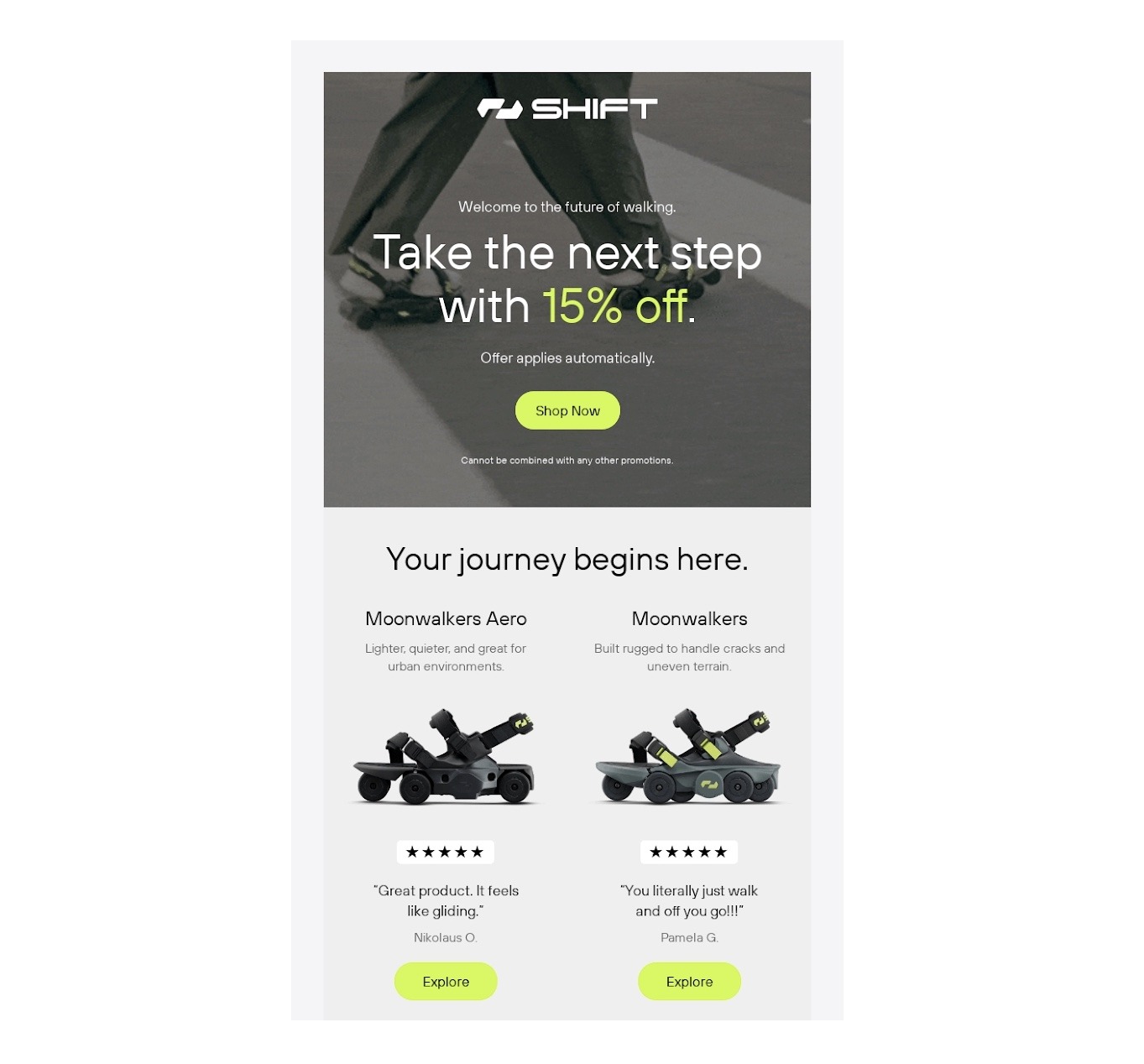
Welcome Email
This is sent immediately after someone joins your list. It’s your first impression, so use it to introduce your brand, set expectations, and give new subscribers a reason to shop.
Cart Abandonment
This is triggered when someone adds items to their cart but doesn't check out. A well-timed reminder, sent within an hour or two, recovers a meaningful share of that lost revenue.
6. Use Social Media for Trust, Not Just Reach
The brands that get the most out of social media use it to show shoppers why they should buy from them specifically. That same content does double duty: AI tools increasingly pull from social signals when assessing brand credibility.
Show Product Use Cases
Instead of posting a product photo, show the product solving a real problem or fitting into a real moment.
Post Customer Content and Testimonials
Posting a real customer showing your product in their home, on their body, or in their daily routine is some of the most persuasive content you can share.
7. Add Affiliates and Creators Once Your Basics Are Working
Once your store is converting and your core marketing channels are in place, affiliate marketing and creator partnerships give you a way to reach new audiences and drive more revenue.
8. Focus on Retention to Increase Profit
Selling to someone who's already bought from you is much easier than winning new customers, especially if they had a positive experience with their last purchase.
Add Upsells and Cross-Sells
Say you sell coffee equipment, and a customer just bought a French press. An upsell would be prompting them to upgrade to a premium version with a better filter before they check out.
Offer Subscriptions for Replenishable Products
If you sell something people use regularly, like skincare, supplements, coffee, or pet food, a subscription option is worth setting up.
9. Track What Matters and Improve Monthly
Good marketing decisions come from good data. But you don't need to track everything, just the right things.
Watch a Small Set of KPIs
Rather than drowning in data, focus on five metrics that actually tell you how your business is doing: conversion rate, average order value (AOV), customer acquisition cost (CAC), repeat purchase rate, and revenue by channel.
10. Make Your Store Easy to Trust Across Search and AI
Search engines and AI tools use the same signals to decide whether your store is worth recommending: accuracy, consistency, and trustworthiness.
Keep Product Information Accurate and Consistent
Your product titles, descriptions, prices, and availability should be consistent across your website, marketplace listings, and any platform you sell on.
At Chulbul Design, we emphasize the importance of consistency in ecommerce marketing to build trust with both shoppers and AI systems.
By following these 10 ecommerce marketing strategies, you'll be well on your way to attracting both human shoppers and AI systems, driving traffic, conversions, and repeat purchases in 2026 and beyond.