
The Ultimate Guide to Choosing the Best Web Development Company in India
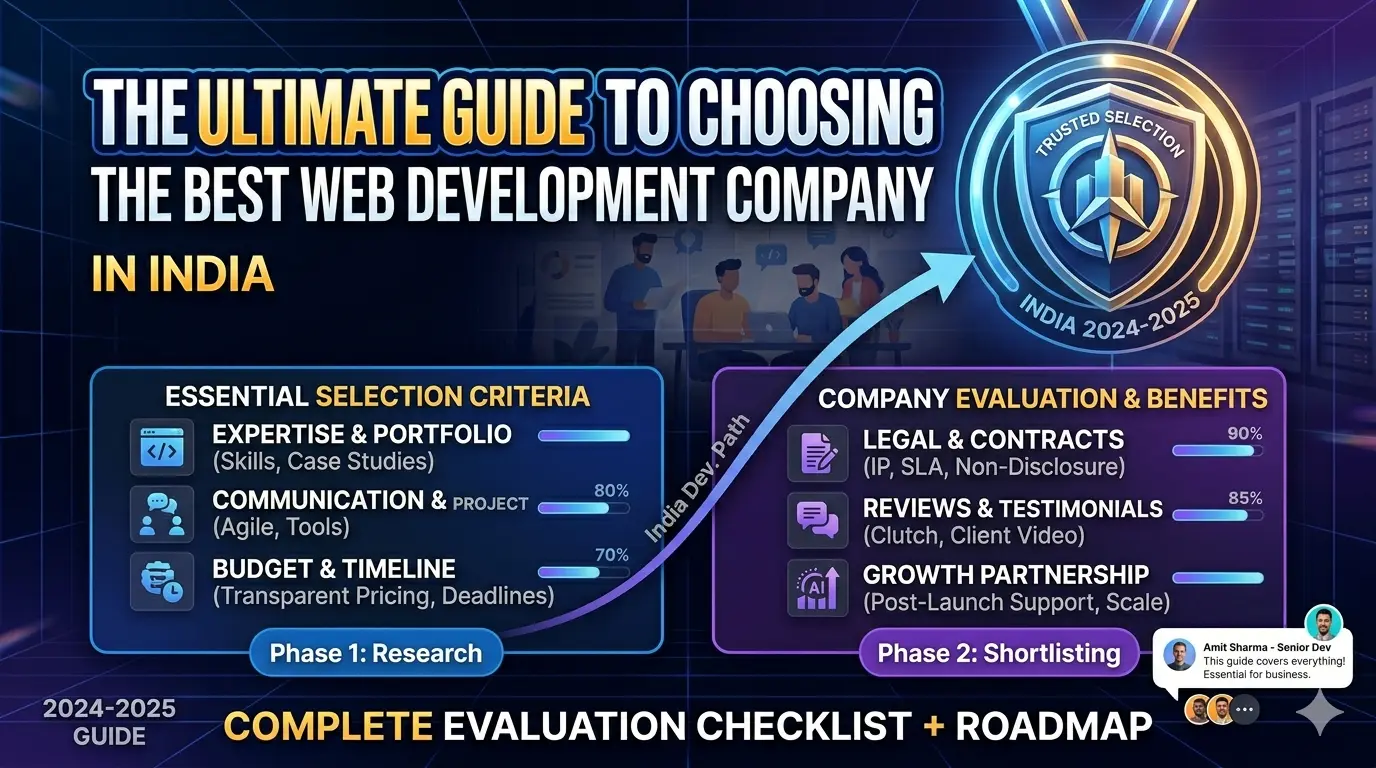
Introduction to Web Development in India
India has emerged as a global hub for web development services, catering to the needs of startups, SMEs, enterprises, and international brands. In 2026, businesses are no longer satisfied with just a website; they demand fast, secure, mobile-first, SEO-ready, and conversion-focused digital platforms.
With thousands of web development companies in India, selecting the right partner can be overwhelming. Choosing the wrong partner often leads to delays, poor performance, hidden costs, and disappointing results. This comprehensive guide explains how to make the right decision based on real-world business needs and current industry trends.
Why Businesses Choose India for Web Development
India offers a unique combination of technical expertise, innovation, and cost efficiency. Top-ranking companies on search engines highlight several reasons global clients prefer Indian developers:
- Highly skilled talent pool
- Competitive pricing compared to Western markets
- Experience across industries
- Strong English communication
- Ability to handle complex projects
- Long-term support capabilities
From simple business websites to enterprise platforms, Indian firms deliver scalable solutions for global markets.
Step 1: Define Your Project Requirements
Before approaching any web development company, understand what you actually need. Key questions to answer include:
- What type of website do you want? (business, eCommerce, portal, SaaS, etc.)
- Who is your target audience?
- What features are essential?
- Do you need integrations with other systems?
- What is your budget and timeline?
Clear requirements help web development companies provide accurate proposals and prevent scope confusion later.
Step 2: Evaluate the Company’s Portfolio
A strong portfolio demonstrates real capabilities, not just marketing claims. Look for:
- Projects similar to your industry
- Modern design standards
- Mobile responsiveness
- Speed and performance
- Functionality and usability
- Diversity of solutions
Visit live websites they built to assess quality firsthand.
Step 3: Check Technical Expertise and Technology Stack
Modern websites require more than basic coding. Leading web development companies in India typically specialize in:
- Responsive frontend frameworks
- Scalable backend systems
- CMS platforms
- eCommerce solutions
- API integrations
- Cloud deployment
- Performance optimization
Ensure the company uses current technologies suitable for long-term growth.
Step 4: Assess SEO and Performance Capabilities
In 2026, a website that does not rank on search engines has limited value. A professional web development partner should build SEO-ready websites with:
- Clean code structure
- Fast loading speeds
- Mobile-first design
- Optimized page architecture
- Schema implementation
- Security features
These factors directly impact visibility, traffic, and conversions.
Step 5: Review Client Feedback and Reputation
Testimonials and reviews reveal reliability and professionalism. Check for:
- Client success stories
- Ratings on marketplaces or review platforms
- Long-term client relationships
- Case studies with measurable results
Consistent positive feedback indicates dependable service.
Step 6: Understand Their Development Process
A structured workflow ensures timely and high-quality delivery. Typical professional processes include:
- Requirement analysis
- UI/UX design planning
- Development phases
- Testing and quality assurance
- Deployment
- Post-launch support
Transparency at each stage reduces risks and misunderstandings.
Step 7: Evaluate Communication and Support
Effective communication is critical, especially for remote projects. Choose a company that offers:
- Clear points of contact
- Regular progress updates
- Quick response times
- Collaboration tools
- Ongoing maintenance services
Poor communication is one of the biggest causes of project failure.
Step 8: Compare Pricing — But Don’t Choose Based on Cost Alone
Extremely low quotes often indicate compromised quality or hidden charges. Consider overall value instead:
- Expertise and experience
- Technology quality
- Scalability
- Support services
- Long-term reliability
A well-built website delivers returns for years, making it a strategic investment.
Step 9: Ensure Scalability for Future Growth
Your website should evolve with your business. Future-ready platforms allow:
- Addition of new features
- Traffic growth handling
- Integration with marketing tools
- Expansion into new markets
- Enhanced security measures
Rebuilding from scratch later can be expensive and disruptive.
Step 10: Verify Post-Launch Support and Maintenance
Websites require ongoing updates, security patches, and performance monitoring. Confirm that the company provides:
- Technical support
- Bug fixes
- Feature upgrades
- Backup solutions
- Security monitoring
Reliable maintenance ensures long-term stability.
Common Mistakes to Avoid When Hiring a Web Development Company
Based on real business experiences, avoid these pitfalls:
- Choosing solely based on price
- Ignoring technical expertise
- Not checking past work
- Overlooking SEO considerations
- Failing to define requirements clearly
- Selecting companies without support plans
Avoiding these mistakes can save significant time and money.
The Impact of the Right Partner on Business Growth
A high-quality website is more than a digital brochure; it is a growth engine. Professional development can deliver:
- Higher search engine rankings
- Increased lead generation
- Better user engagement
- Strong brand credibility
- Improved conversion rates
- Competitive advantage
Businesses with optimized websites consistently outperform those with outdated platforms.
If you're weighing this for your own project, that's the kind of decision we help with at Chulbul Design.
Frequently Asked Questions
What is the average cost of web development in India?
The average cost of web development in India varies based on the type of website, technology stack, and complexity. However, you can expect to pay anywhere from ₹50,000 to ₹5,00,000 or more for a high-quality website.
How long does it take to develop a website in India?
The time it takes to develop a website in India depends on the scope of the project, the experience of the developer, and the technology used. On average, it can take anywhere from 2 weeks to 6 months to develop a website.
What are the benefits of hiring a web development company in India?
The benefits of hiring a web development company in India include access to a highly skilled talent pool, competitive pricing, and long-term support capabilities. Indian web development companies can deliver high-quality solutions that meet global standards.
How do I choose the best web development company in India?
To choose the best web development company in India, evaluate their portfolio, technical expertise, and client feedback. Consider their experience, communication, and support services. Ensure they use current technologies and have a structured development process.